Key takeaways
- Full speed is 48 A (11.5 kW) on a dedicated 60 A circuit. Smaller breakers are allowed, and the charger is set to match during commissioning.
- At full power, Tesla requires at least 6 AWG copper with 75°C breaker terminals, or 4 AWG with 60°C terminals, plus a separate equipment-grounding conductor. Copper only.
- It's hardwired line-to-line at 240 V. The branch breaker is the disconnect, and cord-and-plug connections aren't permitted.
- Up to 6 Wall Connectors can share power as a group, so two-EV homes and multifamily sites don't need a full circuit for every charger.
- Commissioning in Tesla's installer app sets the breaker size, connects 2.4 GHz Wi-Fi, updates firmware and activates the warranty.
Breaker size sets the charging speed
EV charging is a continuous load, so the circuit is sized at 125% of the charging current. The Wall Connector is told the breaker size during commissioning and limits itself to match:
| Breaker | Max charging current | Power at 240 V |
|---|---|---|
| 60 A | 48 A | 11.5 kW (about 44 miles of range per hour) |
| 50 A | 40 A | 9.6 kW |
| 40 A | 32 A | 7.6 kW |
| 30 A | 24 A | 5.7 kW |
| 20 A | 16 A | 3.8 kW |
A 40 A circuit still adds roughly 25–30 miles of range per hour, enough for most San Diego commutes overnight. The right size comes from your load calculation, not the charger's maximum.
Wire size and type
- Copper only. The terminals accept 12 to 4 AWG, solid or stranded.
- At full power (60 A breaker): minimum 6 AWG copper with a 90°C THWN-2 rating when the breaker terminals are rated 75°C, or 4 AWG when they're rated 60°C. Long runs may need a larger size for voltage drop.
- NM (Romex) cable is limited to its 60°C ampacity, which is why a 60 A circuit in NM cable usually needs 4 AWG. In conduit, THWN-2 conductors are typical.
- Grounding: a separate equipment-grounding conductor runs with the circuit. The charger continuously monitors ground and refuses to charge with a high-resistance ground path.
- Torque: terminal screws are torqued to 50 in-lb. Under-torqued terminals are a leading cause of heat damage on any high-current connection.
Connection, disconnect and GFCI
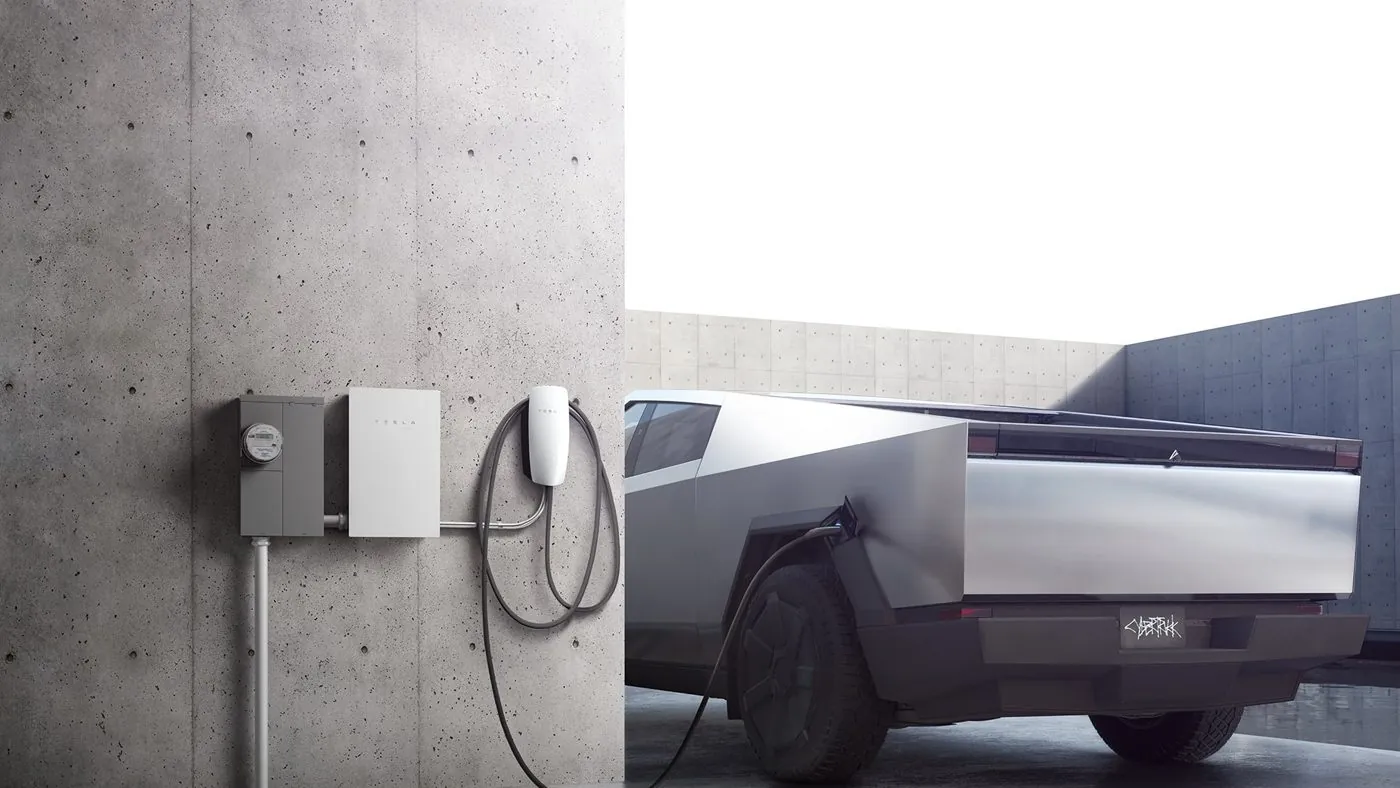
On a 120/240 V home service, the Wall Connector is connected line-to-line (L1, L2 and ground); no neutral is used. The branch breaker serves as the disconnect, so Tesla says an external disconnect switch is neither required nor recommended. The unit is hardwired; cord-and-plug connection isn't permitted. Ground-fault protection is built in, so it doesn't need a separate GFCI breaker. That's one of its advantages over an outlet; see Wall Connector vs NEMA 14-50.
Mounting
- Height to the bottom of the unit: about 45 in recommended, 60 in maximum, 18 in minimum indoors and 24 in minimum outdoors.
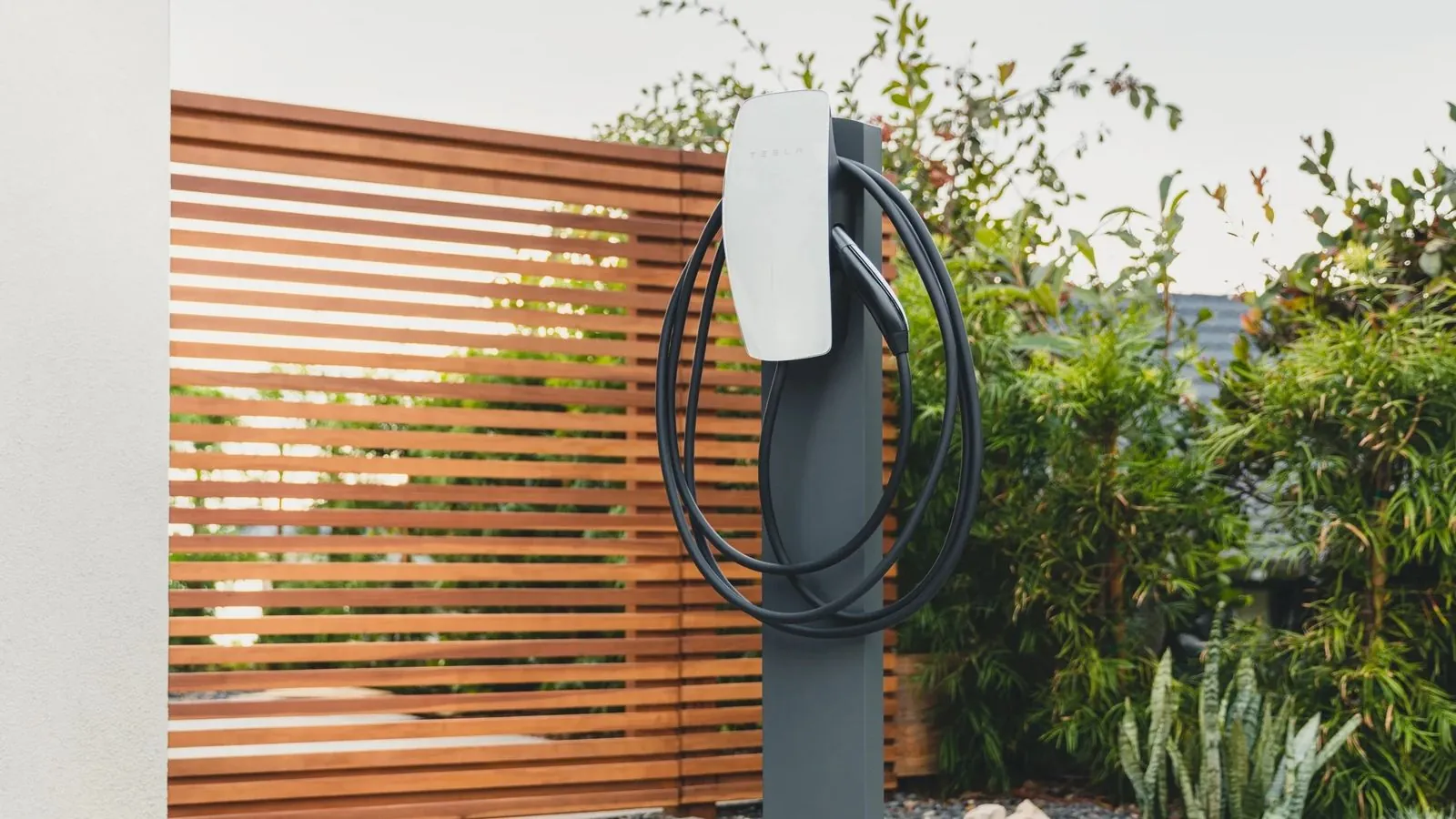
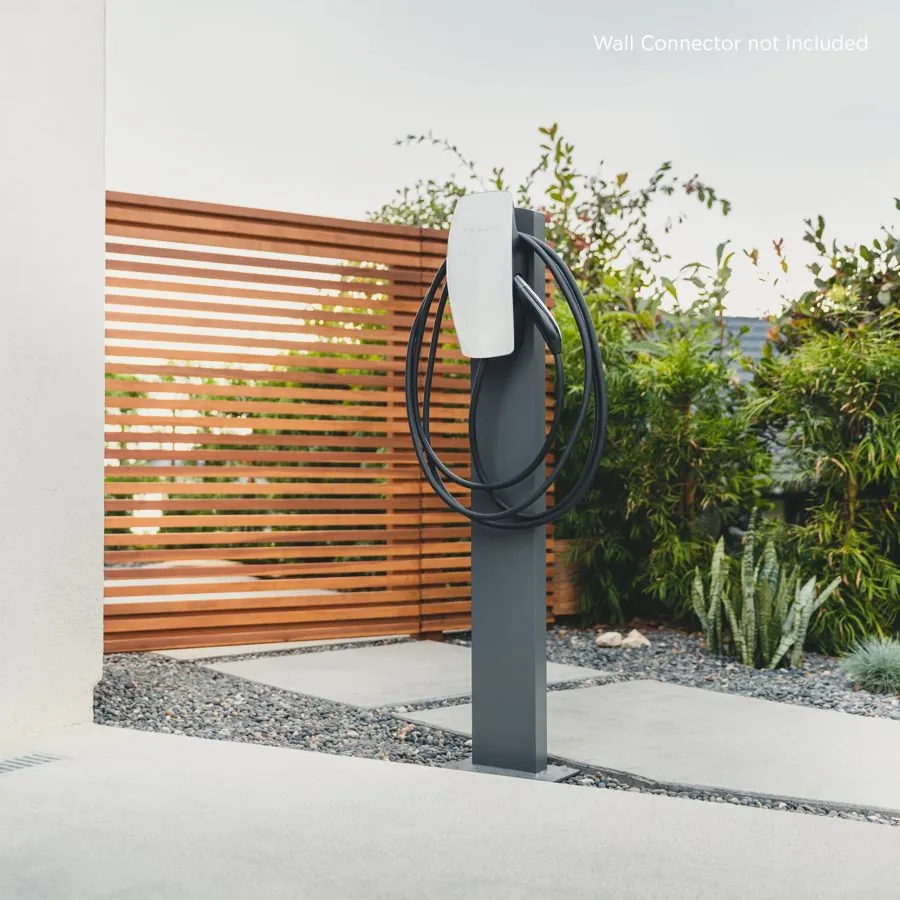
- NEMA 3R enclosure, rated for garages, exterior walls and pedestals.
- The 24 ft cable (a 13 ft version is also available) should reach the charge port with either parking orientation.
Panel capacity and the load calculation
A 48 A charger is one of the largest loads in a home. Before installing, we run a load calculation using the electrical code's method for existing dwellings, with the charger counted at its full rating. If capacity is tight, the options are a lower breaker setting, Tesla's power management, an energy management system that throttles charging when the house is busy, or a service upgrade. See Can I add an EV charger without upgrading my panel?
Power sharing for two or more EVs
Up to six Wall Connectors (one leader, five followers) can be grouped to share power. Daisy-chained units on one branch circuit are limited to a combined 48 A on a 60 A breaker. Power sharing lets a two-EV garage, an HOA or a workplace add chargers without a full-size circuit for each.
Commissioning checklist
- Connect with Tesla's installer app and set the country and breaker size.
- Join a 2.4 GHz Wi-Fi network (WPA2 or WPA3). Check signal strength in the garage first.
- Install firmware updates.
- Register the installer and the customer. Customer registration activates the warranty.
- Test-charge the vehicle and confirm the current.
- Electrical permit inspection by the city or county.
Looking for a price?
Every installation depends on your panel, wiring route and equipment choices, so we don't publish prices. A licensed C-10 electrician will look at your home and give you a written estimate.
Request a Wall Connector estimate →Common questions